
When organizations reach out to me for help, one of the first requests I hear is, “We need better business process documentation.”
They want standard operating procedures. Training manuals. Checklists. Documentation that employees can follow consistently. Those are all valuable. But I almost never start there.
The reason is simple: documenting a process doesn’t improve it. Documentation preserves a process. If that process is inconsistent, filled with workarounds, or understood differently by every employee, you’ve simply documented confusion.
That’s why I always begin somewhere else.
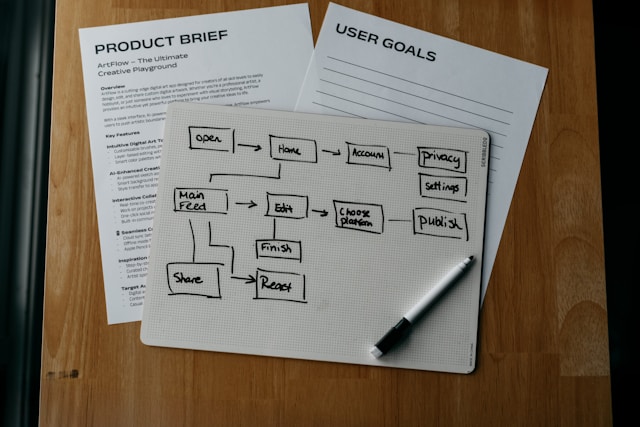
I start by making the work visible.
Before writing a single SOP or creating a training guide, I want to understand how work actually flows through the organization. Only then can we determine what deserves to become the standard.
This is the biggest difference between process mapping and business process documentation—and it’s one many organizations overlook.
What Is Business Process Documentation?
Business process documentation is exactly what it sounds like: creating a written record of how work should be performed.
That documentation may include:
- Standard operating procedures (SOPs)
- Work instructions
- Process manuals
- Training documents
- Checklists
- Decision guides
Strong business process documentation creates consistency. It reduces reliance on tribal knowledge, accelerates onboarding, and gives employees a common reference point when questions arise.
As organizations grow, documentation becomes increasingly important because knowledge can no longer live inside the heads of a few experienced employees.
But documentation has an important limitation.
It assumes the process has already been defined.
If the process itself isn’t clear, documenting it doesn’t solve the problem.
It simply makes the problem easier to repeat.
Why I Always Map the Process First
Throughout my career, I’ve found that one of the fastest ways to improve a business isn’t by creating better documentation.
It’s by creating better visibility.
When I facilitate a Goods & Information Flow session with a leadership team, I ask everyone to map how work actually moves through the business.
Not how they think it works. Not how it’s supposed to work. How it really works today. That’s usually when the surprises begin.
Someone from Sales explains the process one way. Operations describes something completely different. Customer Success has developed its own workaround. Finance has added an approval nobody else knew existed.
Everyone is trying to accomplish the same outcome, but they’re operating from different versions of the process.
At that moment, most leaders realize something important. They don’t have one process. They have several. That realization isn’t a failure. It’s the beginning of improvement.
Process Mapping Creates Clarity. Business Process Documentation Preserves It.
One of the biggest mistakes I see organizations make is documenting a process before they’ve fully understood it. Imagine asking five employees to write down how they complete the same task. You might receive five different answers.
Each person believes they’re following the correct process because they’ve developed their own way of getting the work done.
If you immediately turn one of those versions into an SOP, you haven’t created a standard. You’ve simply chosen one person’s interpretation. Process mapping prevents that from happening.
By bringing the people involved together and visually mapping every step, every decision, and every handoff, the team develops a shared understanding of the current state.
Only after that conversation should documentation begin. Documentation shouldn’t define the process. It should capture the process that the team has intentionally agreed upon.
Toyota Taught Me to Find the Facts First
One lesson I carried with me from Toyota is the importance of fact-based findings. Before discussing solutions, we focused on understanding reality.
What actually happens?
Who performs the work?
Where does the information move?
Where does the product—or service—move?
Where do delays occur?
What decisions are being made?
Those questions may sound simple, but they’re incredibly powerful because they remove assumptions from the conversation. I’ve watched countless meetings where teams jump straight into solutions before they’ve agreed on the problem.
Someone suggests automation. Someone else recommends another approval. Another person proposes a new system. Meanwhile, nobody has clearly defined the current process. Process mapping forces everyone to work from the same set of facts. Only then does process improvement become productive.
Why Business Process Documentation Matters More Than Ever
As businesses grow, documentation becomes essential. Without it, every new employee learns differently. Training becomes inconsistent. Quality varies depending on who performs the work.
Knowledge leaves when experienced employees leave.
According to McKinsey Global Institute, knowledge workers spend nearly 20% of their workweek searching for internal information or locating colleagues who can answer questions. That’s valuable time lost because information isn’t easily accessible or standardized.
At the same time, Prosci’s change management research found that organizations with excellent change management are significantly more likely to achieve or exceed their project objectives than those with poor change management. Clear documentation plays an important role in that success because it provides employees with a consistent reference point as new processes are introduced.
The takeaway isn’t that businesses need more documentation. They need better documentation—documentation built on a process that has already been clarified, simplified, and agreed upon.
When to Use Process Mapping and When to Use Business Process Documentation
The easiest way to think about these tools is to recognize that they solve different problems.
Use process mapping when you’re trying to understand how work currently happens. It’s the right approach when teams experience recurring bottlenecks, inconsistent execution, communication breakdowns, or uncertainty about where problems originate.
Use business process documentation after you’ve improved the process. Once the team agrees on the best way to perform the work, documentation helps preserve that standard, train new employees, and create consistency across the organization.
One creates visibility.
The other creates repeatability.
Both are essential.
But the order matters.
Final Thoughts
One of the biggest misconceptions about operational excellence is that better documentation automatically leads to better execution. In my experience, the opposite is often true. Better execution leads to better documentation.
When you first make work visible, your team begins having conversations it has never had before. Hidden workarounds become obvious. Unnecessary steps stand out. Different interpretations of the same process surface naturally.
That’s when meaningful improvement begins. Only after you’ve simplified the process, clarified responsibilities, and aligned the team should you invest time creating business process documentation.
Documentation is incredibly valuable. But it should preserve clarity—not create it.
If you want documentation that truly helps your organization scale, start by understanding how work actually flows today because you can’t standardize what you haven’t first made visible.